

Induction cooktop retrofit projects are changing how Americans upgrade their kitchens, especially when replacing outdated gas stoves. If you are curious about making the switch, understanding the real-world benefits and potential hassles is crucial before you begin. Here’s how to make an informed, safe, and practical retrofit—step by step.
Key Takeaways
- Induction cooktop retrofits are gaining traction, especially in urban homes aiming for better energy efficiency and modern kitchen upgrades.
- Switching from gas to induction involves planning for electrical upgrades, new cookware, and understanding hidden costs not often revealed upfront.
- Portable and low-power induction units now provide renters and legacy homeowners an affordable, low-hassle pathway to electrify their cooking setup.
- What Is an Induction Cooktop Retrofit and Why Retrofit Now?
- How to Retrofit: A Step-by-Step Guide
- Advanced Analysis and Common Pitfalls
- Conclusion
- FAQ
What Is an Induction Cooktop Retrofit and Why Retrofit Now?
An induction cooktop retrofit replaces a traditional gas or electric stove with a modern induction unit. Unlike gas, induction uses direct electromagnetic energy to heat cookware, boosting speed, safety, and efficiency. Retrofits have surged in the US, reflecting a $4.5 billion projected market and a shift toward sustainability and precision cooking. Recent Department of Energy standards and city electrification policies are rapidly phasing out gas options in many homes, especially in urban remodels and premium housing [KBV Research].
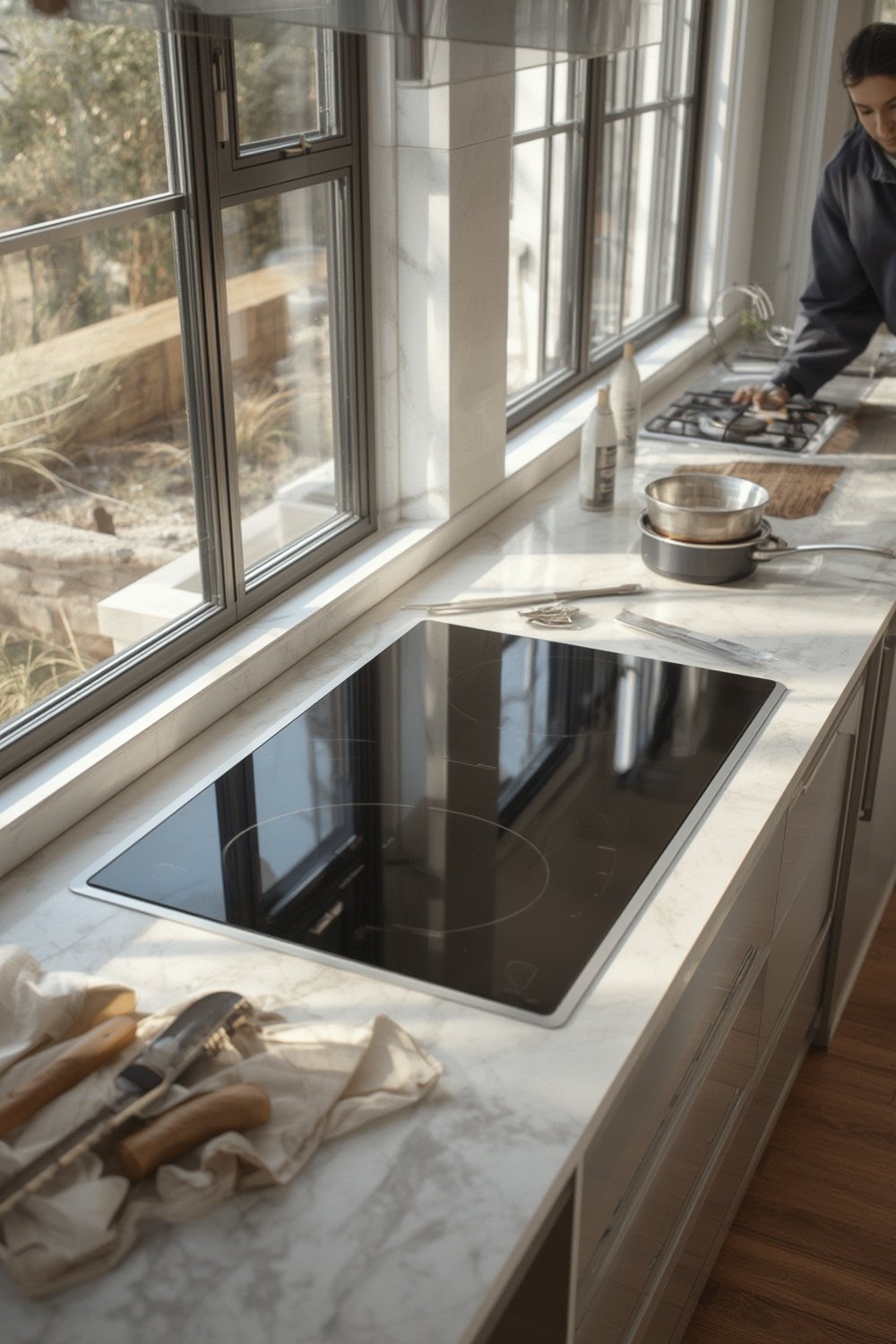
The adoption rate of induction across residential kitchens is steadily climbing, with built-in units dominating renovations (over half the market share by 2025). For apartments and vintage homes, portable and freestanding induction models, thriving at a 7.45% CAGR, provide a simple way to electrify a kitchen without a total overhaul [Mordor Intelligence].
If you’re exploring other affordable kitchen upgrades, consider pairing your retrofit with DIY peel and stick backsplash installation or smart under sink pull out organizer solutions for a holistic, modern refresh.
How to Retrofit: A Step-by-Step Guide
Switching from gas to induction can be straightforward if you follow the right steps and avoid shortcuts. Here is a practical process for homeowners or renters.
-
Assess Your Current Setup:
- Check your kitchen’s layout and measure the current cooktop cutout or counter space.
- Verify power supply and available outlets. Most full-size induction units require a dedicated 240V circuit (30-50 amp), while portable versions need just a standard 120V outlet.
- If you are unsure, consult a licensed electrician for a quick assessment.
-
Choose the Right Induction Cooktop:
- For permanent installations, select a built-in model sized correctly for your cutout and panel ratings.
- If panel upgrades are a concern or you are a renter, opt for a portable or compact 120V model for easier integration.
-
Electrical Preparation:
- Full-size induction stoves need a dedicated 240V line (often 30-50 amps) and a compatible circuit breaker. Older homes may require panel upgrades, which can add significant expense.
- For portable models, simply plug into a GFCI-protected 120V outlet.
- Always turn off power at the panel before any work.
-
Remove the Old Gas Stove:
- Shut off the gas valve completely and disconnect the appliance. Cap and check for leaks. Consider a professional for gas line capping if you’re unfamiliar with plumbing codes.
-
Install the Induction Cooktop:
- Set the unit into the counter cutout or place the portable unit securely on a flat surface.
- Secure per manufacturer instructions to prevent movement.
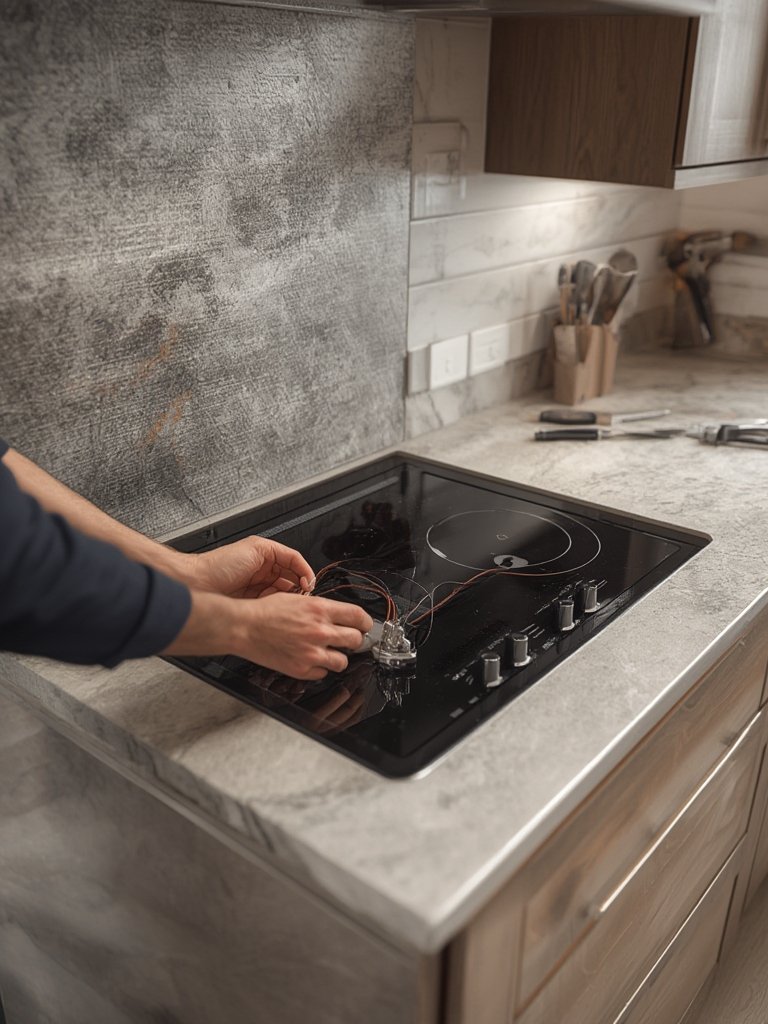
- Connect the appropriate electrical wiring or plug in. Double-check all connections.
-
Update Ventilation (if needed):
- Induction produces far less ambient heat and fumes than gas, often making upgraded ventilation optional.
- Retrofit downdraft induction units are available for ductwork-free options.
- In tight spaces, consider slimline range hoods or ductless filters that can handle any steam or odors.
-
Check for Local Permits or Rebates:
- Some areas require electrical permits for new circuits or appliance drops—always check with your city or HOA.
- State and federal rebates may be available, especially if you qualify as a low-income electrification retrofit. Contact your utility for details.
-
Test and Cook:
- Before routine use, test all burners at full and low power. Listen for unusual noises and check for error codes.
- Remember that only magnetic cookware (steel or iron) will work—aluminum or copper pans require an induction-safe set.
Thinking about sustainability and whole-home energy savings? Consider pairing your retrofit with upgrades like an energy-efficient heat pump water heater or new EV charger installation at home for total electrification.
Advanced Analysis and Common Pitfalls
Induction cooktop retrofits come with real-world challenges. Here’s what homeowners and renters typically encounter:
- Electrical Panel Limitations: Many older homes lack adequate electrical capacity. A new 240V circuit or even a full panel upgrade may be needed—these hidden costs are the top cause of retrofit delays and budget overruns.
- Cookware Compatibility: Only magnetic cookware works on induction. Expect to replace non-magnetic pans, which can cost $150 or more for a basic set.
- Unanticipated Installation Costs: Besides the cooktop price (ranging from $400 for portable to $2,500+ for built-in), factor in electrician labor ($400–$1,200+), wiring, permits, and disposal of your gas unit.
- Gas Line Safety: Improper capping of old gas lines poses risks. Always call a licensed plumber if unsure.
- Cultural Cooking Preferences: Many home cooks prefer gas for stir frying or using specialty cookware. Induction’s ultra-fast heating can take practice to master.
| Factor | Gas Stove | Induction Retrofit |
|---|---|---|
| Upfront Appliance Cost | $400–$1,200 (new) | $400–$2,500+ (portable to built-in) |
| Typical Installation/Labor | $200–$700 | $400–$1,500 (may need panel work) |
| Cookware Replacement | Not needed | Possible ($100–$300 for induction-safe set) |
| Ventilation Needed | Yes (gas fumes) | Usually optional |
| Efficiency & Energy Loss | 30–40% lost as ambient heat | 10–15% lost (more efficient) |
| Sustainability/CO2 Impact | High (natural gas combustion) | Low (no onsite emissions) |
Recent studies show that while there is a clear efficiency gain and environmental benefit with induction, hard numbers on monthly gas-to-induction cost savings are still scarce. However, ENERGY STAR standards and local rebates continue to make induction much more attractive for new and retrofit installations [Future Market Insights].
For those with smaller kitchens or needing temporary upgrades, check out removable backsplash tiles and modern acoustic wall panels for added function and style.
Conclusion
An induction cooktop retrofit delivers tangible benefits—higher efficiency, greater safety, and compatibility with the modern push for sustainability—but it is not a plug-and-play affair for every kitchen. Consider electrical panel capacity, ventilation needs, and cookware requirements before your upgrade. For many, starting with a portable unit makes sense; for full remodels, plan for professional installation and anticipate hidden expenses.
Ready to electrify your kitchen? Start with a clear plan, get a professional assessment if needed, and enjoy the speed and control of modern induction. Explore more home upgrade ideas for a smarter, safer house—from DIY garage gym flooring to solar battery storage for home backup—and make your next induction cooktop retrofit one you’ll love for years.
FAQ
Is a portable induction cooktop a practical solution for renters?
Yes, portable induction cooktops are ideal for renters. They require only a standard outlet, need no special wiring or permits, and can be stored after use. Most offer fast, safe cooking and meet the needs of small families or single cooks.
Will I need to upgrade my electrical panel to install an induction cooktop?
If you choose a built-in, full-size induction unit, you often need a dedicated 240V circuit. Many older homes lack the needed capacity, resulting in electrical panel upgrades. Portable 120V units do not require these changes, making them easier to adopt.
Do I have to replace all my cookware for induction cooking?
Only magnetic (steel or iron) cookware works on induction. Test with a magnet—if it sticks, it will work. Aluminum, copper, or glass pans will need replacement or an induction-compatible base.
Are there energy or cost savings when switching from gas to induction?
Induction is more energy efficient, converting more power directly to heat and reducing ambient loss. Exact annual cost savings depend on usage, electrical rates, and regional incentives, but the environmental impact is consistently reduced compared to gas.
Do I need to update my kitchen ventilation after an induction retrofit?
Not necessarily. Induction cooktops do not emit combustion byproducts or excess heat, so many homeowners find standard ductless hoods or downdraft units adequate. Always consider your cooking style and kitchen layout for best results.